Category / Blog / Resources / What's New
-

![A graphic stating the Ethics Dispatch is like an ethics committee meeting in a box. With four topic sections: monthly hot topic, new clinical ethics case study, current bioethics news stories and ethical musing essay.]()
When the ECMO Bridge Leads Nowhere
No Tidy Answers: When the ECMO Bridge Leads Nowhere Perhaps it’s not about destination but the journey. That when we cannot alter the destination, we can profoundly shape the experience of getting there. The case study picks up the topic with a patient whose husband requests ECMO to save her life without her consent. Ryan follows up with the one question to ask about ECMO and other medical miracles. The Center for Practical Bioethics.
-
![Portrait of Lily Rajaee, BS, MS]()
Empowering Medical Trainees to Confront the Misinformation Epidemic
Empowering medical trainees to confront the misinformation epidemic. CPB Francis Co-Chair Kayhan Parsi and one of his medical students, Lily Rajaee, examine the misinformation problem and propose a framework involving three steps that can help guide productive conversations with patients. The Center for Practical Bioethics
-
![A graphic stating the Ethics Dispatch is like an ethics committee meeting in a box. With four topic sections: monthly hot topic, new clinical ethics case study, current bioethics news stories and ethical musing essay.]()
Doing Harm: Vaccine Policy in the Age of Distortion
Doing Harm: Vaccine Policy in the Age of Distortion The January 2026 Ethics Dispatch discusses how the current head of the Department of Health and Human Services, Robert F. Kennedy Jr., who is calling for the reduction or even the elimination of childhood vaccine and by doing so, is doing harm. The Center for Practical Bioethics.
-
![Kayhan Parsi, JD, PhD, HEC-C, and Nanette Elster, JD, MPH, as our John B. Francis Co-Chairs in Bioethics.]()
Interview with Kayhan Parsi and Nanette Elster: the John B. Francis Co-Chairs in Bioethics
Interview with Kayhan Parsi and Nanette Elster: the John B. Francis Co-Chairs in Bioethics Since joining the Center this fall, Professors Kayhan Parsi, JD, PhD, HEC-C, and Nanette Elster, JD, MPH, discuss what excites them most about supported decision-making, disability ethics, and the future of bioethics education. Center for Practical Bioethics
-
![Fox TV series "Doc" cast.]()
Why Didn’t They Call a Clinical Ethicist?
Much of the action in Fox’s TV series, “Doc,” revolves around clinical ethics cases. One case involved a critically ill patient who never removed his ex-husband as proxy from his advance directive. Now, the patient’s current partner is in favor of a risky surgery; the ex-husband is opposed. Why wasn’t a clinical ethicist brought in to resolve the situation?
-
![A graphic stating the Ethics Dispatch is like an ethics committee meeting in a box. With four topic sections: monthly hot topic, new clinical ethics case study, current bioethics news stories and ethical musing essay.]()
Ethics Dispatch November 2025 Beneficence
The November 2025 Ethics Dispatch discusses beneficence in the season of caring . What does it mean to actively do good? 150,000 people with serious mental illness live in nursing homes, often longer than their medical needs require because the broader system has no place for them to go. In the case study we learn about a patient ready for discharge, but no facilities will take him. Then we discuss the shortcomings of EMTALA and how they demonstrate the need to rediscover the theory of medicine so that its practice meets patients’ needs. The Center for Practical Bioethics.
-
![Kayhan Parsi, JD, PhD, HEC-C, and Nanette Elster, JD, MPH, as our John B. Francis Co-Chairs in Bioethics.]()
The Center Welcomes Kayhan Parsi and Nanette Elster – A Tribute to Mentorship and Transformation
Read how our Vice President of Ethics Services, Ryan Pferdehirt, came to be one of Kayhan Parsi and Nanette Elster’s students and how working directly with them he learned new ways to apply his clinical ethics skills, expand his knowledge of pediatric ethics, and cultivate his bioethics scholarship.
.
-
![Lindsey Jarret with i.c.stars iOpener event panelists.]()
AI Ethics Finds a Home in Workforce Development
Dr. Lindsey Jarrett writes about AI ethics finding a home in workforce development through the process that led to an award this summer by the Kauffman Foundation to support the Ethical AI Capacity Building and Residency Support Program for i.c.stars Kansas City staff and participants.
-
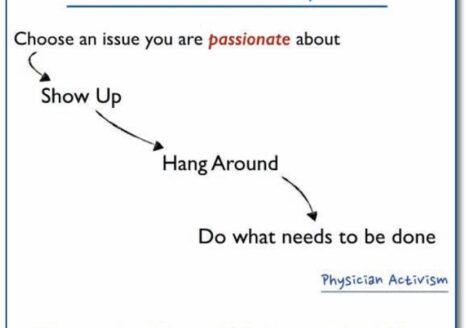
![A graphic of the four part "Accidental Activist Algorithm." Attributed to Missouri Medicine issue Nov-Dec 2014.]()
Accidental Activist Gets Stuff Done – The 2025 Vision to Action Award Winner Edwin Kraemer MD
Ed Kraemer’s formula for a life of meaning has four parts he calls “Accidental Activist Algorithm.” It’s a formula that helps to explain why the Center for Practical Bioethics will honor Ed with the 2025 Vision to Action Award at the Flanigan Lecture on November 12.
-
![A graphic stating the Ethics Dispatch is like an ethics committee meeting in a box. With four topic sections: monthly hot topic, new clinical ethics case study, current bioethics news stories and ethical musing essay.]()
Ethics Dispatch October 2025
The October 2025 Ethics Dispatch highlights how misinformation, political interference, and profit-driven publishing threaten the integrity of science and public trust in healthcare. Defending evidence and fairness is a moral duty rooted in bioethics’ principle of justice. The Center for Practical Bioethics calls for renewed commitment to truth, transparency, and ethical integrity in research and public discourse.