Category / Blog / Resources / What's New
-

![A graphic stating the Ethics Dispatch is like an ethics committee meeting in a box. With four topic sections: monthly hot topic, new clinical ethics case study, current bioethics news stories and ethical musing essay.]()
When Children Become Pawns: The Human Cost of the Florida Vaccine Dispute
Florida’s threat to Catholic school scholarships over vaccine exemptions raises a bioethics question: who bears the consequences? Children and families. The Center for Practical Bioethics.
-
![Dr. Khandker K. Namir is the Ethics Champion of 2026.]()
Ethics Champion 2026: Dr. Namir Khandker’s Proactive Approach to Clinical Ethics
A proactive approach to clinical ethics is how neurocritical care physician Namir Khandker, MD, rebuilt ethics at Ochsner Health by bringing clinical ethics in early — not as an eleventh-hour solution. The Center for Practical Bioethics.
-
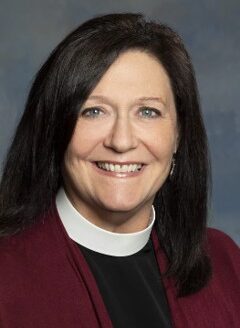
![Portrait of Rev. Susan Roberts.]()
Clinical Ethics Partnership: Good for Patients, Staff and BJC St. Luke’s
How clinical ethics partnership supports hospital teams like BJC St. Luke’s: complex case navigation, reduced moral distress and burnout, and stronger patient advocacy. The Center for Practical Bioethics.
-
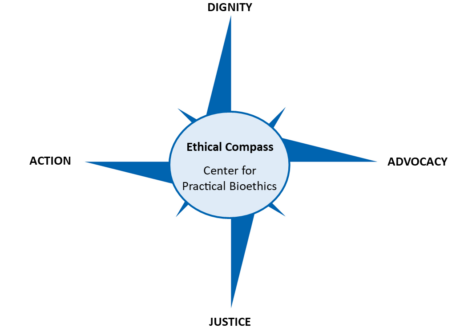
![A graphic of CPB's four ethical points: dignity, advocacy, justice, action.]()
The Elevator Speech: How to Talk About the Center for Practical Bioethics
Struggle to explain what the Center for Practical Bioethics does? Get our elevator speech, mission messaging, and audience-tailored talking points. The Center for Practical Bioethics.
-
![Ask a Bioethicist Special Edition logo of a compass.]()
Ask a Bioethicist: One case. Three bioethicists analyze.
Ask a Bioethicist: One case, three bioethicists analyze. The clinical ethics case: a Jehovah’s Witness patient’s blood transfusion refusal versus her family’s consent. Read how autonomy and beneficence collide. The July 2026 Ethics Dispatch is the first quarterly special edition called Ask a Bioethicist. The Center for Practical Bioethics.
-
![A graphic stating the Ethics Dispatch is like an ethics committee meeting in a box. With four topic sections: monthly hot topic, new clinical ethics case study, current bioethics news stories and ethical musing essay.]()
The Most Important Ethical Challenge of Our Time: Remaining in Conversation
The June 2026 Ethics Dispatch explores patient autonomy, transgender health policy, medical decision-making, and the ethical role of empathy in clinical practice — with a real-world ethics case study. The Center for Practical Bioethics.
-
![Ryan at a hospital ethics committee meeting.]()
Ethics Consultation: A Strategy for Overcoming Barriers to Trust in Healthcare
Discover how healthcare ethics consultation builds institutional trustworthiness, bridges value conflicts, and improves patient care outcomes for families and clinicians. The Center for Practical Bioethics.
-
![A fence representing a barrier.]()
Communicating Health Barriers and Solutions to Decision Paralysis and Confirmation Bias
Decision paralysis and confirmation bias can present major barriers to effective communication in healthcare. Odessa Sawyer, MSW, Program Coordinator at the Center, describes how these barriers work and how partnerships with community organizations can alleviate many of these barriers. The Center for Practical Bioethics.
-
![A graphic stating the Ethics Dispatch is like an ethics committee meeting in a box. With four topic sections: monthly hot topic, new clinical ethics case study, current bioethics news stories and ethical musing essay.]()
Policy Volatility, Abortion Access, and the Erosion of Trust in Healthcare
A federal appeals court recently restricted access to the most commonly used medication abortion drug – Mifepristone — via mail before the Supreme Court temporarily restored broader access while it considers the case, leaving the ultimate outcome uncertain and leaving the public unsure and anxious. We explores the many ways instability in access to the drug creates avoidable harms and, ultimately, erodes public trust in healthcare. The Center for Practical Bioethics.
-
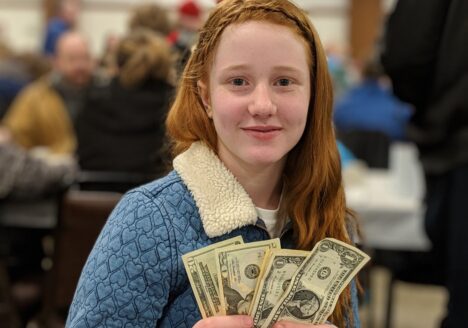
![Teenage girl holding a donation at a fundraising event.]()
Beyond the Gala: A New Model for Community-Driven Fundraising in Bioethics
The Center is redefining fundraising through community-driven events, expanding reach, and making bioethics more accessible to all. The Center for Practical Bioethics.